I need to add the URL for the way to describe bread: www.farine-mc.com/2015/03/
CORRECTION from last post…..
Reply
I need to add the URL for the way to describe bread: www.farine-mc.com/2015/03/
Its all about the wheat…about the wheat.. about the wheat.. and amber waves of grain (as the saying goes) I want to share with you from another blogger about the great flour coming out of Community Grains in Oakland: Tartine blog Experiment I am using it and the difference is extraordinary. The owner of Oliveto restaurant in Oakland Bob Klein felt there was a world of difference in the many wheat varieties grown locally. He started experimenting with whole grain pastas from the wheat Grown and milled by local farmers mostly from the Ukiah County where the soil conditions are the best .Bob Klein and other like minded folks such as chad Robertson of Tartine bread and Rhonda Weidenbeck of BEcks BAkery and Josey Baker of JOsey baKER bread in san Francisco are all part of this new grain economy. Eating whole grains locally grown and milled is the first goal and then ultimately the next step is introducing whole grains back into children’s school lunch programs. Check out the beautiful breads at www.beckbakery.com. I was recently given some hard red spring wheat, hard red winter wheat, soft red spring wheat and other varieties. How does one describe the different flavor profiles of wheat.. Well guess what? Someone even came up with something…
Aroma and flavor notes for bread by Michael Kalanty.
I read somewhere that to be a baker one must “have the fortitude not to be pushed by anything but the demands of the bread itself.” I am still practicing the art of understanding what it is that the bread is demanding…. and you my friends get to taste the fruits of my labors all along the crumbly trail…
EAT.GOOD.BREAD.
MORE ABOUT THIS COMING SOON. I WILL BE STARTING A SERIES OF CLASSES FOR 11 TO 14 YEAR OLDS IN BAKING BASICS INCLUDING USING COMMERCIAL YEAST AS WELL AS LEARNING HOW TO MAKE YOUR VERY OWN SOURDOUGH STARTER FROM SCRATCH!!
It will be a 3 classes …. 1) bread basics 2) sourdough simplified PART1 and sourdough simplified PART 2.
Classes will be here at 95 corona way carmel highlands… and will be on a Saturday for 3 to three and 1/2 hours.
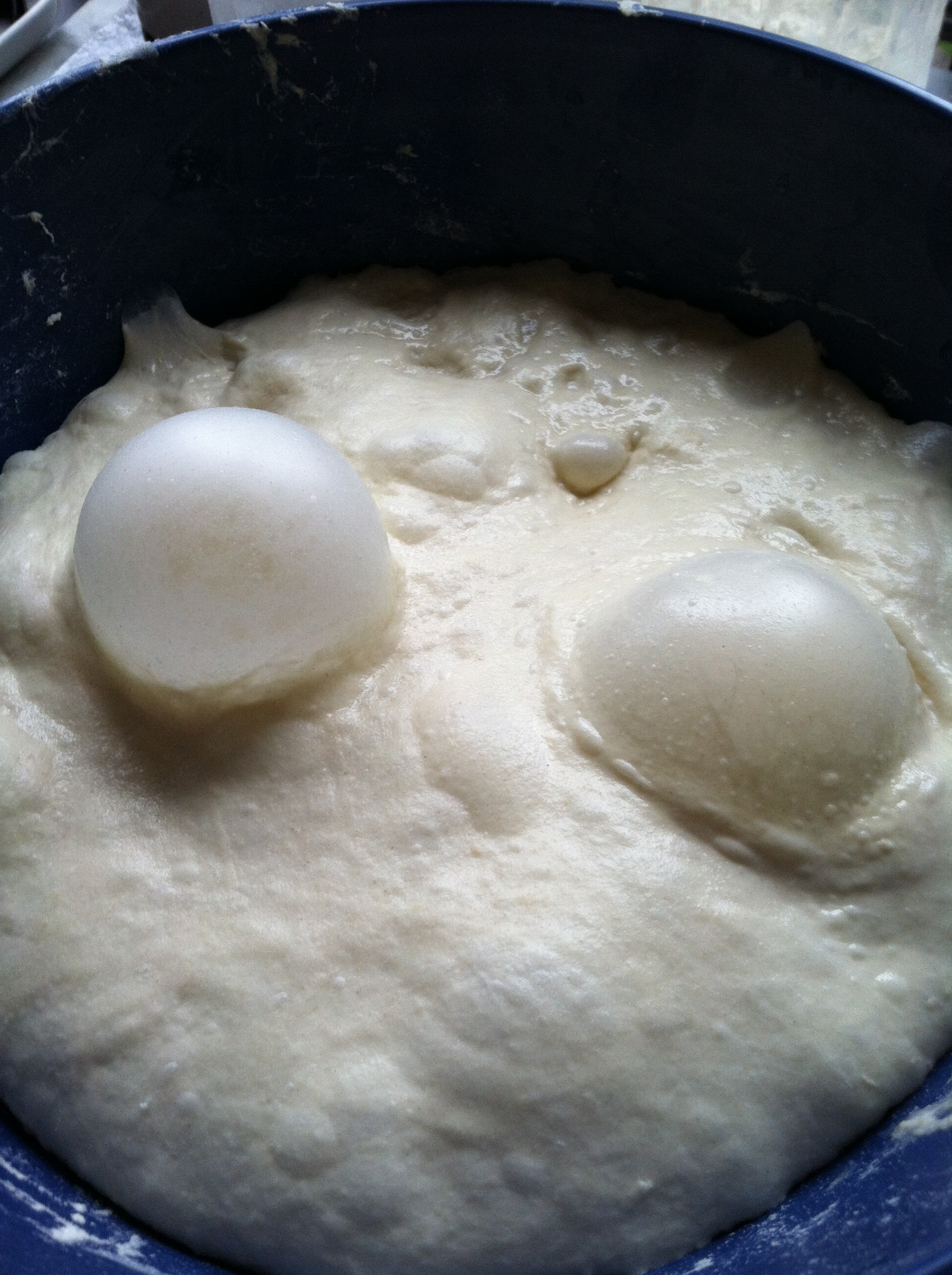
bubble bubble toil and trouble. fire burn and starter bubble!
“Anytime a person walks into a delicatessen and orders a pastrami on white bread another jew dies” Milton Berle..
What I have been learning and experimenting with lately is how to get lightness and large holes in breads. Every book I read is a different story. Right now that is my preference in bread but as I have learned, my preference will again change as soon as I have a new challenge right? There is a man named Chad Robertson who started Tartine Bakery in San Francisco.. He developed this technique of stretching and folding the dough over a period of 5 hours or so to help develop the gases which when baked turn out to be holes… When I tasted his bread 3 years ago, yes it was a revelation because he not only got the “holiness,” he got the crust too with this extraordinary bronzed burnished look. The bread is saying: “You know I am the greatest thing you will taste today” and it was true.. The deal is the Italians and the French and the Germans have been creating extraordinary breads forever and this surfer dude (chad robertson) is the one here on the West Coast (san francisco to be exact) who is one of a few great bakers to try and capture what it is we love about the European breads. It turns out it is the long fermentation, the high quality mix of several flours, the way the dough is mixed and the kind of vessels we use in which to bake the bread In the East coast you have Dan Leader of Bread Alone bakery and Amy Scherber of Amys Bread and Jim Sullivan of Sullivan Street Bakery in Soho. What Chad has done now is create another book where he uses ancient grains like Einkhorn, Kamut, Teff, Spelt ,Amaranth, Chia,Farro, and sorghum to create fabulous tasting bread.
I would like to acknowledge some of my favorite baking teachers that have kept me running home to “watch the dough” and see what is happening with it..
1)Tassajara bread book: long ago I tasted the bread the monks made at Tassajara Monastary and made my first loaves from the Tassajara bread book.. I will never forget the sweet and whole grain flavors of those breads.
2) Beard on Bread: this classic by James Beard (1974) introduced me to the incredible variety of breads there were to bake.. Breads I had never heard of like Graham bread, Walnut Bread, Cracked Wheat Bread, Italian Feather Bread, Potatoe Pumpernickle to list just a few..
3)Sunset magazine breads: This magazine held my hand thru the steps of making bread in a very clear and concrete way
………and then we fast forward to the slow fermented breads of the past few years using home made sourdough;;
4) Local Breads by Dan Leader.. He showed me the breads of Italy, France and Germany and got me excited about why it is important to preserve those ancient flavors…. In france it might be the Auvergne Dark Rye,, In Italy: it could be the corn-rye rounds; where corn and rye grains grow well in the Dolomites, northwest of Venice as you get into the foothills of the Alps.. or it might be In Germany; a bread called Dreikornbrot which is made with flax, sesame and sunflower..
5)Secrets of a Jewish Baker by George Greenstein. This guy was the first to introduce me to Altus ( a mash made of slicing and trimming the crusts from leftover sour rye bread) Altus intensifies the distinctive flavor of pumpernickle and rye bread helping them to retain moisture.. also he taught me with very good pictures how to make the different shapes of bread like torpedo, batard, baguette or round..
6)How to make bread by Emmanuel Hadjiandreou: this guy taught me the best formula for sourdough.. 1 tablespoon starter, 2/3 cup water and 1 cup flour.. It works the best for so many breads.. and last but not least
7)Bread for all Seasons by Beth Hensperger.. She has breads taking you thru the 4 seasons with great explanations of breads served in Mexico, Greece, Sweden and other scandinavian countries..
so I have learned a little from a lot of people which adds up to all the breads that you all have been eating.
so yes I am going on thru the winter to spring months January thru march 2015 $30 subscriptions due. 2 breads each month for 3 months..
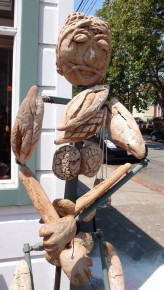
**I might end up looking like this guy if I keep up the way I am going…
Without a bang or a whimper I have come to the two year mark. I know exactly what it means to not be able to pick a favorite bread…that is the question I always get from people. My favorite is the next bread I am dreaming of….A friend of mine pointed out that she always sees bits of dried flour lodged in my cuticles of my fingers and I guess that is my bread badge of honor.. oh yes that and the rusted red burn marks on exactly the same places on the underside of my forearms.
One of the strangest parts of this bread baking bonanza is that I did not know how symbiotic I would become with the sourdough starter… the water/flour mixture that ferments for a couple of days and then is added to your main dough.. the starter is everything..It is your starter, your middler and your finisher.. It gives texture, flavor, leavening power.. (oomph you might say) to the finished loaf. When my starter is not bubbling away and lies flat,,, I become obsessed and I mean obsessed with what I did wrong.. I take it personally. I do not have a child or a pet and so I can probably make a good argument that standing watch over the little lump of dough has fulfilled that mothering urge. I also do not know if you all know that my great uncle Willy Rosenberg had a bakery in Mobile, Alabama. He and his three sisters were all from Vienna ,Austria but He was able to get to America before the war broke out because of a business associate that he knew. He had begun in Alabama in the tree felling business but then switched to the baking business. The story of my grand ma mutti, great aunt hani and great aunt pepi is for another entry.. Needless to say they did survive escaping the Nazis and I met and loved them all.. but I never got to meet Willy the baker so I wonder if this baking bug is a homage to the Willy Rosenberg bakery.
Just three weeks ago, I had a breakthru in baking. I kept reading the directions.. “mix till dough comes together into a raggedy mass then let sit for 20 minutes.” Well only by two years of experimenting did I learn that what makes wonderful bread is when you leave the dough a “slightly moist raggedy mass” You see something magical happens when you understand the fine time to let your hands off the dough before it becomes a raggedy mass. You see it has to be “tacky but not sticky” Yes what does tacky mean? Well, as it turns out.. tacky is the magic word.. It means that just when the dough can hold together without it sticking to your hands you quit.. Time does all the rest… the flour absorbs slowly and creates the enzymes glutenin and gliandin which will give it its structure and also create a moister and lighter bread.. In other words, one too many flicks of the wrist and your bread will be good but not GREAT!!. I am talking lighter, filled with holes, moist and stay fresh longer.. there that is what has taken me two years to learn.. The secret is out:..
Less is more… Keep paying attention to the details.. Have fun playing and Keep in touch…
and so lets roll…
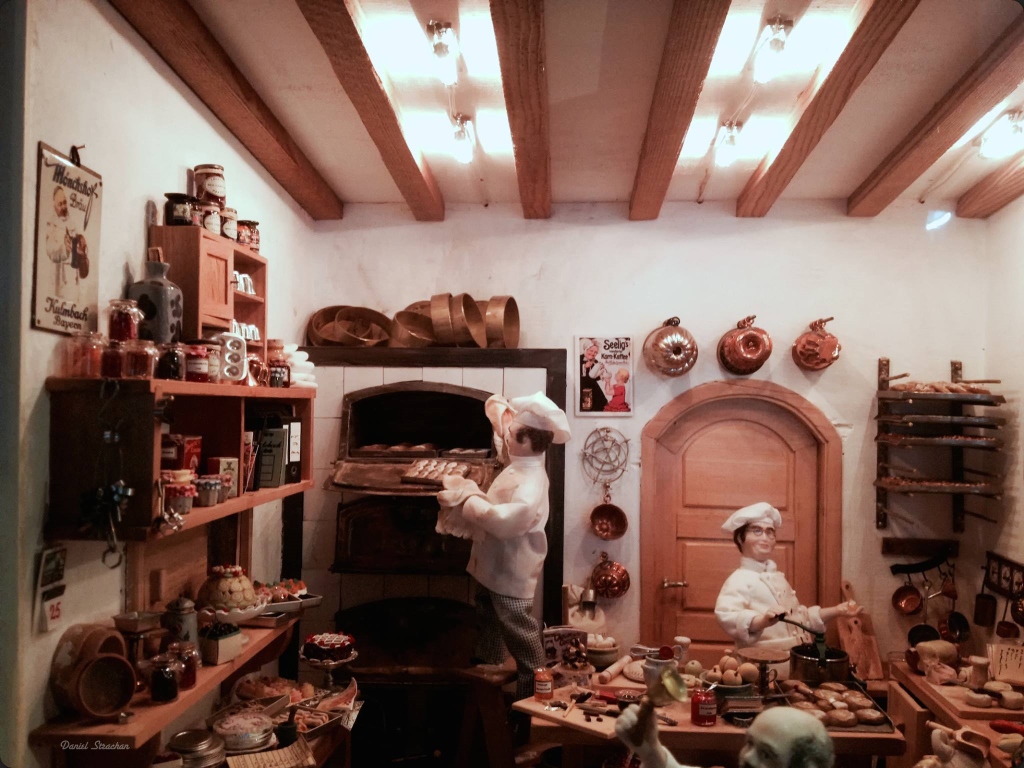
 YE OLDE HIGHLANDS BAKERY SHOPPE